
Wisconsin Workforce Housing News

Leo@WWHNews.com
Ken@WWHnews.com
This Weeks Articles for 10/26/2026 ...
- New data shows housing affordability falling, mortgage rates rising...
- City of Eau Claire announces $785k in affordable housing grants...
- Groundbreaking for Prairie Haus Senior in New Glarus...
- CVS Health: Thank You! Phoenix Residential Grand Opening in Milwaukee, Wisconsin...
- McShane Construction Company Completes 76-unit Affordable Housing Development in Madison, Wisconsin ...
- Ground Broken for Scholar’s Ridge Development in Plymouth...
- FHLBank Chicago Awards $5 Million to Support Affordable Housing Developers in Illinois and Wisconsin...
NEW SUBSCRIBE Link
Community Updates, News Stories, Best Practices, Resources, and other data supporting the development of affordable housing for the citizens of Wisconsin in every city and region in the State. Please consider partnering with us and sharing your story
Special Note: Leo and Ken are focused on bringing economic development, regional growth, and workforce housing expertise together at the community level. We hope to help turn new state policy into actual projects - and ultimately into homes for the workers these communities need to sustain their businesses and economy. We are excited to be a part of this conversation.

New data shows housing affordability falling, mortgage rates rising
 GREEN BAY, Wis. (WBAY) - New data from the Wisconsin Realtors Association shows housing affordability fell 5.5% over the past 12 months.
In the same time span, mortgage rates rose 0.5%, resulting in a 2.4% reduction in September sales.
Statewide listings are also down more than 5%.
It comes as the average monthly 30-year fixed mortgage rates rose to 6.86%, the highest since January of last year.
“You have an awful lot of people who locked into mortgages at very favorable rates, five to six years ago,” says David Clark, a consultant with the Wisconsin Realtors Association. “You might be pretty reluctant to put an existing home on the market if you’ve got a 3% mortgage rate and trade it in for a 7% mortgage rate.”
...Full Story Here
Ken and Leo Note: This is a real problem and there are few real solutions on the horizon. The difference on a 250K home is -- 7% is $1,666/month vs. 3% is 1,056/month for a 30 year mortgage. Yep -- more than $600 a month more.
City of Eau Claire announces $785k in affordable housing grants

How recent grants are removing barriers to housing
The city of Eau Claire recently announced $785,000 of affordable housing grants and is currently seeking requests from developers to utilize this funding.
According to WEAU, these grants are supported through the city’s Affordable Housing Fund established in 2020, and this is the city’s third time offering funding.
Community Development Project Coordinator for the city of Eau Claire, Billie Hufford, said this wave of funding is focusing specifically on bridging access to housing for lower-income individuals.
“The city’s Housing Opportunities Commission (HOC) is interested in proposals that expand affordable housing opportunities in the city,” Hufford said. “The scoring matrix created by HOC emphasizes affordability at levels affordable to households making 60% or less of the County Median Income (CMI).”...
Leo's notes: Eau Claire is targeting workforce and lower-income housing through both new construction and rehabilitation, building on earlier funding rounds that helped deliver more than 100 units. The broader opportunity is to use public investment strategically—not simply to fill financing gaps, but to demonstrate housing models that other Wisconsin communities can realistically replicate.
Groundbreaking for Prairie Haus Senior in New Glarus
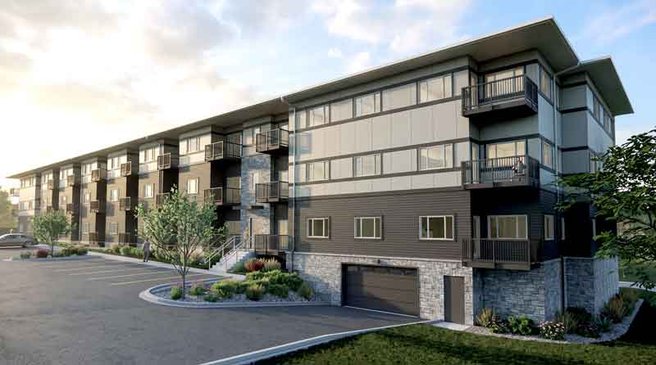
NEW GLARUS — Wisconsin Housing Preservation Corp. (WHPC) will celebrate the groundbreaking of Prairie Haus Senior on Tuesday, October 20, at 3 p.m. Located at 1003 Elmer Road in New Glarus, the new senior housing development will add 50 rental apartments for adults age 55 and older, expanding housing options in Green County. The development is anticipated to open in mid-summer 2027.
With a projected cost of $10.8 million, the three-story development will include 35 one-bedroom and 15 two-bedroom apartments. Of the 50 units, 30 will be market-rate rentals and 20 will be income-restricted for households earning up to 60% of the area median income (AMI).
The project will be funded through 501(c)(3) tax-exempt bond financing, WHPC equity, a WHPC Capital Magnet award, and gap funding from the Green County Development Corporation...
Leo's notes: Senior housing deserves a more prominent place in Wisconsin's workforce housing strategy. Projects like Prairie Haus Senior can help create a more diverse housing supply, but their broader economic value depends on whether they allow longtime residents to remain in their communities while opening opportunities for a new generation of homeowners.
CVS Health: Thank You! Phoenix Residential Grand Opening in Milwaukee, Wisconsin
 WOONSOCKET, RI / ACCESS Newswire / October 23, 2026 / CVS Health
Recently, the Grand Opening of Phoenix Residential in Milwaukee marked a milestone for the residents, local leaders, community and development organizations, who helped bring the community to life.
Leo's notes: The conversion of a former nursing home into affordable housing and a community resource center illustrates the intersection of housing, health, and economic opportunity. With CVS Health and Aetna contributing $500,000, the project also raises an important question: should healthcare institutions play a more direct role in financing housing as a strategy for improving community health?
Wisconsin Workforce Housing Resources
 ...Full Story Here







McShane Construction Company Completes 76-unit Affordable Housing Development in Madison, Wisconsin
“Completing our first project with Volker Development is an exciting milestone for our team,” remarked Alison Gorham, Vice President & Director of Wisconsin Operations at McShane. “Kelly Station reflects a shared commitment to delivering quality affordable housing that prioritizes both residents and the surrounding community.”
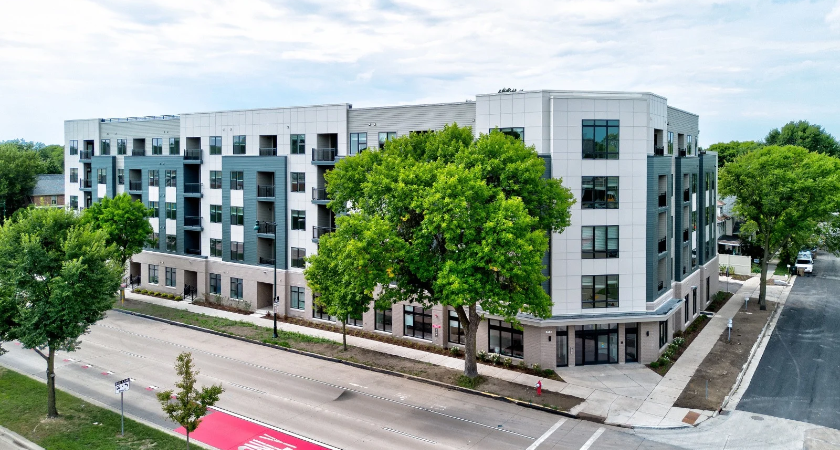
Madison, Wisconsin – McShane Construction Company is pleased to announce the completion of Kelly Station, a 76-unit affordable housing community for client Volker Development.
Located at 2462 E. Washington Avenue in Madison, Wisconsin, Kelly Station is a five-story podium-style building with four floors of apartment residences atop an above-grade precast parking garage. The exterior design features masonry at the ground level, complemented by a combination of Hardie plank and lap siding across the upper four stories.
...Full Story Here
Leo's notes: Kelly Station's location along Madison's East Washington Avenue demonstrates the value of adding affordable housing within established urban corridors, close to transportation and existing infrastructure. The challenge for rural Wisconsin is developing practical housing models in communities with less density, and arguably more important main transit routes...
Ground Broken for Scholar’s Ridge Development in Plymouth
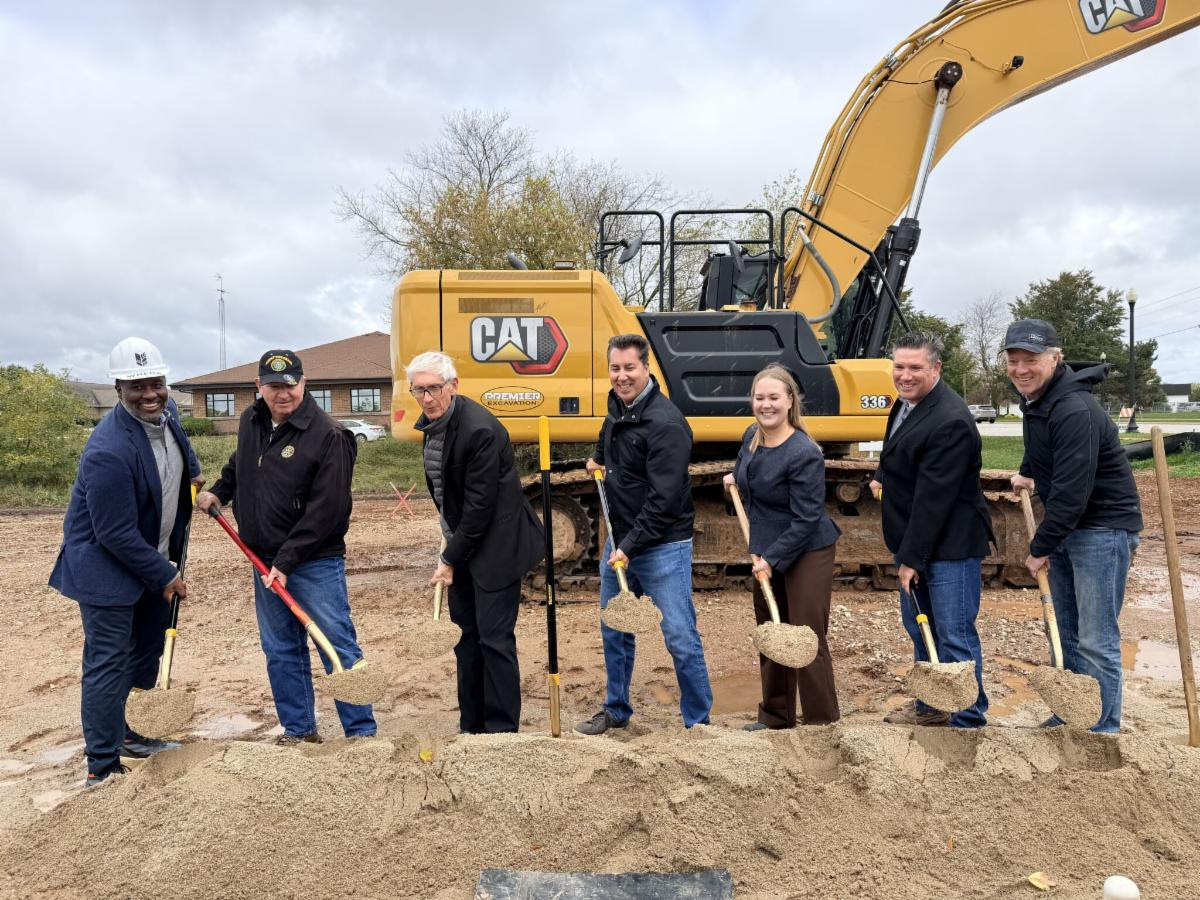
Governor Tony Evers joined community leaders, business partners, and local and state officials last Friday to celebrate the groundbreaking of Scholar’s Ridge. The new residential development in Plymouth is located on South Pleasant View Road, and will create 102 single-family homes, expanding opportunities for attainable homeownership in Sheboygan County.
The groundbreaking marks another milestone in the county’s collaborative efforts to expand accessible homeownership, strengthen local communities, and support the workforce that drives the region’s economy.
Sheboygan County’s Forward Fund, a public-private partnership intended to increase the supply of affordable housing, was a key to making Scholar’s Ridge possible. The fund was launched through significant investments from four founding business partners; Johnsonville, Kohler Co., Masters Gallery Foods and Sargento, with each contributing $2 million...
...Full Story Here
Leo's notes: Scholar's Ridge will deliver 102 entry-level single-family homes on 32 acres, supported by a $3.4 million WHEDA Infrastructure Access Loan and a partnership involving major local employers. It's the third development in Sheboygan County's broader initiative targeting 600 homes. The greatest takeaway here is that employers are directly investing in housing supply, signaling a movement of treating housing as economic development infrastructure.
FHLBank Chicago Awards $5 Million to Support Affordable Housing Developers in Illinois and Wisconsin

The Federal Home Loan Bank of Chicago (FHLBank Chicago) has awarded $5 million through its 2026 Community First Developer Program to support the development of affordable housing professionals and expand housing development capacity across Illinois and Wisconsin.
The funding, distributed through FHLBank Chicago member financial institutions, will support an estimated 95 fellowships and internships at 27 organizations. The latest awards bring the program’s cumulative funding to $17 million since its launch in 2022.
The initiative provides grants to nonprofit, for-profit and quasi-governmental organizations that offer practical training opportunities for emerging affordable housing developers...
...Full Story Here
Leo's notes: FHLBank Chicago's $5 million program will support approximately 95 fellowships and internships across Illinois and Wisconsin. The more consequential opportunity here is the pipeline of developers being built, who will be capable of delivering smaller, incremental housing projects in communities that lack established development capacity.
About Wisconsin Workforce Housing News (WWHNews.com)
Across Wisconsin many employees can simply not afford to live where they work. This is true in big cities and small rural communities. Both the availability and price of housing is not in line with the needs of those working in jobs that are vital to the success of our communities. Imagine a firefighter, teacher, city employee, service, or retail worker not able to afford a home in the community they serve.
Leo@WWHNews.com
List of Housing Resources
CheqBUILT - Chequamegon Bay United Impact Land Trust
WRA Wisconsin Housing Statistics
State of Wisconsin Department of Administration Neighborhood Investment Fund (NIF) Program
ENABLING BETTER PLACES: A USER’S GUIDE TO WISCONSIN NEIGHBORHOOD AFFORDABILITY
WHEDA’s Rural Affordable Workforce Housing Initiative
Wisconsin REALTORS® Association
WISCAP Affordable Housing Network
Division of Energy, Housing and Community Resources
Housing Authority City of Milwaukee (HACM)
Wisconsin Housing Preservation Corp
WEDA Legislative Tracker
DANE WORKFORCE HOUSING FUND
Dane County Regional Housing Strategy (RHS)
A Housing Hurdle: Demographics Drive Need for More Homes
Wisconsin Homeowners Alliance
WRA’s “Falling Behind” report
Social Development Commission - Pathway to success
COMMUNITY DEVELOPMENT ALLIANCE
Middleton Workforce Housing Committee
Milwaukee’s Collective Affordable Housing Strategic Plan
Workforce Housing Initiative For Wisconsin
2020 Symposia Series on Workforce Housing
Wisconsin Homeowners Alliance.org/resources/
City of Milwaukee Affordability Report
WHEDA Qualified Allocation Plan
10-Year Plan to End Homelessness
City of Milwaukee Consolidated Plan
Wisconsin Consolidated Plan
SEWRPC Regional Housing Plan
Wisconsin Policy Forum Reports
Blueprint for a Renters Bill of Rights
White House Fact Sheet on Rental Affordability
Community Economic Development / Division of Extension
Oshkosh Kids Foundation Tiny House Village